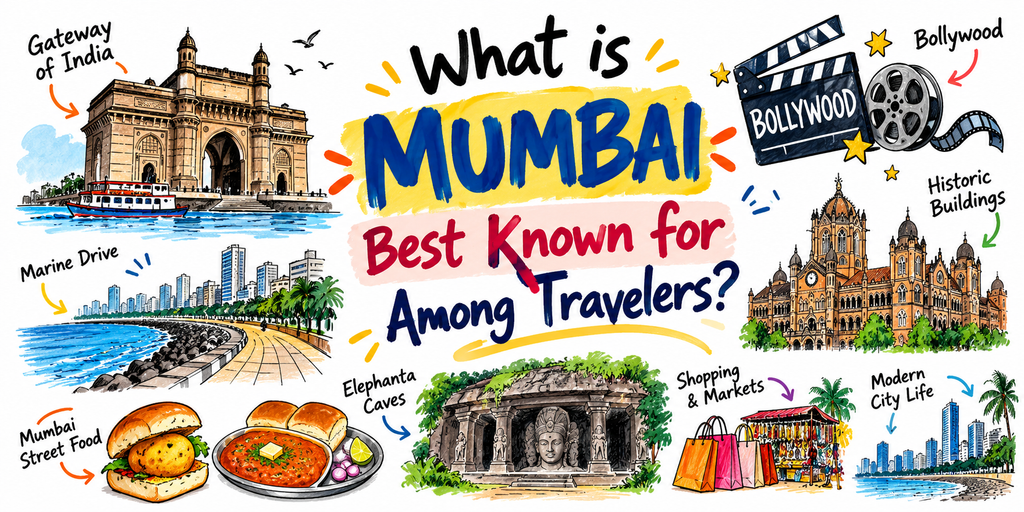
Mumbai is one of India’s most visited and well-known cities. The city sits beside the Arabian Sea. It brings together history, food, films, shopping, art, and modern city life.
For many travelers, Mumbai is best known for the Gateway of India, Marine Drive, Bollywood, street food, historic buildings, Elephanta Caves, and lively markets.
But Mumbai offers more than famous tourist spots. Each area tells a different story. Some places show the city’s past. Others show its modern life.
This guide explains what makes Mumbai special. It also gives a simple step-by-step way to explore the city.
Step 1: Start With the Gateway of India
The Gateway of India is one of Mumbai’s most famous landmarks. It stands beside the Arabian Sea in South Mumbai.
The monument opened in 1924. Today, it remains a major visitor attraction.
Travelers often start their Mumbai sightseeing here. The waterfront also connects with boat trips toward Elephanta Island.
The area gives you several things to enjoy in one stop:
- A famous historic monument
- Arabian Sea views
- Photo spots
- Nearby Colaba streets
- Access to Elephanta ferry services
The Gateway works well as the first stop because several attractions sit nearby.
Gateway of India at a Glance
| Detail | Information |
|---|---|
| Area | South Mumbai |
| Main attraction | Historic Gateway monument |
| Nearby area | Colaba |
| Main experience | History and sea views |
| Good for | First-time visitors |
| Extra activity | Boat trips |
Step 2: Explore Colaba
After seeing the Gateway, explore Colaba.
Colaba has old buildings, shops, cafes, restaurants, and busy streets. It also sits close to several major attractions.
You can walk through the area and enjoy the local atmosphere. You can also stop for food or shopping.
Colaba works well with a Gateway visit. You can cover both areas without making a separate long trip.
What Can You Do in Colaba?
| Activity | What You Can Enjoy |
|---|---|
| Walking | Old streets and buildings |
| Shopping | Local items and souvenirs |
| Food | Cafes and restaurants |
| Photography | Historic streets and buildings |
| Sightseeing | Nearby tourist attractions |
Take your time here. Mumbai’s charm often appears in its streets, not only at major landmarks.
Step 3: Walk Along Marine Drive
Marine Drive is one of Mumbai’s best-known waterfront areas.
The road follows the Arabian Sea. Many people visit during the evening.
Visitors can walk beside the water. They can sit and enjoy the sea breeze. They can also watch the changing colors of the sky.
Marine Drive is also linked with Mumbai’s famous “Queen’s Necklace” view. The curved road and lights create this effect when viewed from a distance.
UNESCO also includes Marine Drive within the setting of Mumbai’s Art Deco heritage area.
Why Do Travelers Like Marine Drive?
- Easy sea views
- Evening walks
- Sunset views
- City skyline
- Relaxing atmosphere
- Good photography opportunities
Marine Drive does not need a full day. You can add it to an evening plan.
Step 4: Discover Mumbai’s Historic Architecture
Mumbai has a rich collection of historic buildings.
The city developed as an important trading center. Over time, new buildings appeared in different architectural styles.
The Victorian Gothic and Art Deco areas are especially important. UNESCO added the Victorian Gothic and Art Deco Ensembles of Mumbai to the World Heritage List in 2018.
The heritage area includes buildings around the Oval Maidan. It also connects with the Art Deco buildings along Marine Drive.
This makes Mumbai interesting for people who enjoy architecture.
Mumbai’s Major Architectural Styles
| Style | What It Shows |
|---|---|
| Victorian Gothic | Large public buildings and Gothic design |
| Art Deco | Early modern urban design |
| Indo-Saracenic | European and Indian design influences |
| Modern buildings | Mumbai’s growing business culture |
The important point is simple. Mumbai’s buildings show how the city changed over time.
Step 5: Visit Chhatrapati Shivaji Maharaj Terminus
Chhatrapati Shivaji Maharaj Terminus is one of Mumbai’s most famous buildings.
The station was formerly known as Victoria Terminus. UNESCO lists it as a World Heritage Site.
The building combines Victorian Gothic design with Indian architectural elements. Its dome, towers, arches, and detailed stone work make it stand out.
But CSMT is not only a historic building. It still serves as a working railway station.
That creates an interesting experience. You can see historic architecture while watching modern Mumbai move around you.
Why Visit CSMT?
| Reason | Experience |
|---|---|
| Architecture | Detailed historic design |
| History | Important part of Mumbai’s past |
| Photography | Strong architectural views |
| City life | Busy railway activity |
| Heritage | UNESCO World Heritage Site |
Step 6: Experience Mumbai’s Street Food
Mumbai is also famous for its local food.
Street food gives visitors an easy way to experience local culture. Popular choices include vada pav, pav bhaji, bhel puri, sev puri, and pani puri.
Each food has a different taste and texture.
Popular Mumbai Foods
| Food | What It Is | Type |
|---|---|---|
| Vada Pav | Potato fritter inside a bun | Quick snack |
| Pav Bhaji | Spiced vegetables with bread | Filling meal |
| Bhel Puri | Puffed rice with chutneys and toppings | Light snack |
| Sev Puri | Crispy base with toppings and sev | Street snack |
| Pani Puri | Crisp shells filled with flavored water | Snack |
Try local food in clean and busy places. If you have food allergies, ask about the ingredients first.
Step 7: Explore Mumbai’s Bollywood Connection
Mumbai has a strong connection with Hindi cinema.
The city is home to much of India’s Hindi film industry. This connection has made Bollywood part of Mumbai’s identity for many travelers.
Movie fans can explore film-related attractions and learn about movie production.
Some visitors also enjoy seeing locations connected with Indian films.
Bollywood Experience
| Interest | What Travelers Can Explore |
|---|---|
| Film history | Growth of Hindi cinema |
| Movie sets | Production environments |
| Cinema | Indian films and theatres |
| Photography | Film-related locations |
| Culture | Mumbai’s entertainment industry |
Bollywood adds a different side to the city. It shows Mumbai as a center of entertainment, not only business and history.
Step 8: Take a Trip to Elephanta Caves
Elephanta Caves offer one of Mumbai’s most important heritage experiences.
The caves sit on Elephanta Island. The island lies about 10 kilometers from Mumbai’s coast.
Travelers can take a ferry from the Gateway of India. The journey takes about an hour, according to Maharashtra Tourism.
The caves contain rock-cut temples and sculptures. Cave 1 is especially known for its large Trimurti sculpture of Shiva.
The site gives travelers a chance to see ancient Indian art and architecture.
Elephanta Caves Travel Details
| Detail | Information |
|---|---|
| Location | Elephanta Island |
| Distance | About 10 km from Mumbai |
| Main access | Ferry |
| Ferry journey | Roughly one hour |
| Main interest | Ancient caves and sculptures |
| Good for | History and culture lovers |
| UNESCO status | World Heritage Site |
Maharashtra Tourism says visitors can also use a toy train on the island. Visitors should check current schedules before planning the trip.
Step 9: Explore Mumbai’s Museums
Mumbai also has museums for travelers who enjoy art, history, and culture.
Museums can help you understand the city beyond its busy streets.
They also work well during very hot weather or rain.
Instead of rushing through several museums, choose one that matches your interest.
Choose Based on Your Interest
| Your Interest | What to Look For |
|---|---|
| History | Historical collections |
| Art | Paintings and visual art |
| Culture | Indian heritage collections |
| Architecture | Heritage buildings |
| Family learning | Educational displays |
Check current opening hours before visiting. Museum schedules can change.
Step 10: Experience Mumbai’s Markets
Mumbai’s markets show another side of city life.
Markets can be busy, colorful, and full of local activity. You may find clothes, accessories, food, books, household items, and souvenirs.
Shopping also gives travelers a chance to interact with local businesses.
However, do not rush into a purchase. Compare prices first.
Keep your phone and wallet safe in crowded areas.
How Should You Explore Mumbai Step by Step?
A smart Mumbai trip starts by grouping nearby places.
This can save travel time. It also helps you enjoy each area without rushing.
Suggested Travel Flow
| Step | Place | Main Experience |
|---|---|---|
| 1 | Gateway of India | Landmark and sea |
| 2 | Colaba | Streets and shopping |
| 3 | CSMT | Architecture and history |
| 4 | Heritage area | Victorian and Art Deco buildings |
| 5 | Marine Drive | Sea and evening views |
| 6 | Food stop | Local Mumbai flavors |
| 7 | Bollywood experience | Cinema culture |
| 8 | Elephanta Caves | Ancient heritage |
You do not need to follow this order exactly. Your route should depend on opening hours, weather, ferry schedules, and traffic.
How Many Days Are Enough for Mumbai?
The answer depends on what you want to see.
A one-day trip can cover major landmarks. A longer trip gives you more time for food, museums, markets, heritage areas, and Elephanta.
Mumbai Trip Planning Table
| Trip Length | Suggested Focus |
|---|---|
| 1 Day | Gateway, Colaba, CSMT, Marine Drive |
| 2 Days | Major landmarks, food, shopping, heritage |
| 3 Days | Add museums and Elephanta |
| 4 Days | Explore at a slower pace |
| 5+ Days | Add more local areas and nearby experiences |
Do not pack too many places into one day.
Mumbai is a large city. Traffic can change travel times.
A slower plan often gives you more time to enjoy the city.
What Is Mumbai Best Known for?
Mumbai has several strong travel identities.
| Category | What Mumbai Is Known For |
|---|---|
| Landmark | Gateway of India |
| Sea view | Marine Drive |
| Cinema | Bollywood |
| Food | Vada pav and pav bhaji |
| History | CSMT and Elephanta Caves |
| Architecture | Victorian Gothic and Art Deco |
| Shopping | Local markets |
| Culture | Museums and heritage areas |
| City life | Busy streets and local neighborhoods |
| Heritage | UNESCO World Heritage Sites |
This mix makes Mumbai different from many other Indian cities.
You can explore history, food, architecture, cinema, and nature within the same trip.
Best Mumbai Experiences for Different Travelers
Not every traveler wants the same trip.
Some people want history. Others want food or photography.
Use this simple guide when planning.
| Traveler | Recommended Experiences |
|---|---|
| First-time visitor | Gateway, Colaba, Marine Drive |
| History lover | CSMT and Elephanta Caves |
| Food lover | Mumbai street food |
| Movie fan | Bollywood-related attractions |
| Photographer | Marine Drive and heritage buildings |
| Architecture lover | Victorian Gothic and Art Deco areas |
| Family | Major landmarks and museums |
| Shopper | Markets and Colaba |
| Culture lover | Museums and Elephanta |
| Relaxed traveler | Marine Drive and waterfront areas |
Important Tips for First-Time Visitors
Mumbai can feel busy at first.
Good planning makes the trip easier.
1. Group nearby places
Do not travel across the city for every attraction.
Plan places in the same area together.
2. Keep extra travel time
Traffic can affect your plans.
Avoid very tight schedules.
3. Check attraction timings
Opening hours can change.
Check official information before you leave.
4. Check ferry information
Elephanta trips depend on ferry services.
Confirm the latest details before traveling.
5. Protect your belongings
Crowded places need extra care.
Keep phones, wallets, and bags secure.
6. Stay hydrated
Mumbai can feel warm and humid.
Carry water during outdoor sightseeing.
7. Leave time for food
Do not make sightseeing the whole trip.
Local food is also part of the Mumbai experience.
A Simple 3-Day Mumbai Itinerary
Day 1: South Mumbai
Start at the Gateway of India.
Then explore Colaba and nearby heritage streets.
Later, visit CSMT and other historic areas.
Finish your day at Marine Drive.
Day 1 Focus
Gateway → Colaba → CSMT → Heritage Area → Marine Drive
Day 2: Culture, Food, and Cinema
Start with a museum or cultural attraction.
Next, explore a local food area.
Spend some time learning about Mumbai’s cinema culture.
End the day with a relaxed evening.
Day 2 Focus
Museum → Local Food → Bollywood Experience → Evening Walk
Day 3: Elephanta and Local Mumbai
Start early for your Elephanta trip.
Take the ferry from the Gateway area.
Explore the caves and return to Mumbai.
Later, visit a local market or another area that interests you.
Day 3 Focus
Gateway → Ferry → Elephanta Caves → Mumbai → Local Market
Maharashtra Tourism currently notes that Elephanta is closed on Mondays and recommends checking travel details before visiting.
Why Is Mumbai So Popular With Travelers?
Mumbai offers many types of travel experiences in one city.
You can see a historic monument in the morning. You can eat local food at lunch. You can explore heritage buildings in the afternoon.
Then you can watch the sunset beside the Arabian Sea.
The city also shows India’s changing history. UNESCO describes Mumbai’s Victorian Gothic and Art Deco ensembles as evidence of major changes in architecture and urban planning.
That mix of old and new gives Mumbai much of its travel appeal.
Final Thoughts
Mumbai is best known for much more than one famous landmark.
Its biggest attractions include the Gateway of India, Marine Drive, Bollywood, street food, CSMT, Elephanta Caves, historic architecture, markets, and local culture.
The best way to experience Mumbai is to explore it step by step.
Start with the famous landmarks. Then explore its food, history, architecture, and local life.
Most importantly, do not rush.
Give yourself time to see how Mumbai’s old buildings, busy streets, sea views, food, and modern life fit together.
That is what makes a Mumbai trip more than a simple sightseeing tour.
Quick Mumbai Travel Checklist
☐ Visit the Gateway of India
☐ Walk along Marine Drive
☐ Explore Colaba
☐ See CSMT
☐ Try Mumbai street food
☐ Explore heritage architecture
☐ Learn about Bollywood
☐ Visit a museum
☐ Plan an Elephanta trip
☐ Explore a local market
☐ Keep extra time for traffic
☐ Check current attraction timings
Hashtags
#MumbaiTravel · #MumbaiTourism · #VisitMumbai · #MumbaiAttractions · #MaharashtraTravel · #MumbaiFood · #TravelIndia · #IncredibleIndia
