Introduction
Mumbai is often celebrated as India’s financial capital, the heart of the film industry, and one of the country’s most vibrant metropolitan cities. Beyond its modern skyline and bustling streets lies a rich historical legacy shaped by colonial influences, maritime trade, cultural diversity, and architectural innovation. The city’s heritage landmarks tell stories of empires, merchants, freedom fighters, and communities that helped shape modern Mumbai.
From magnificent railway stations and iconic waterfront monuments to ancient cave temples and historic museums, Mumbai offers countless opportunities for heritage lovers to explore its fascinating past. Whether you are a history enthusiast, architecture admirer, photographer, student, or traveler seeking cultural experiences, Mumbai’s heritage sites provide a captivating journey through time.
Why Explore Heritage Places in Mumbai?
Mumbai’s heritage landmarks offer unique insights into the city’s evolution and cultural significance.
Some reasons to visit include:
- Discovering centuries of history
- Exploring diverse architectural styles
- Learning about colonial and pre-colonial heritage
- Enjoying photography opportunities
- Understanding Mumbai’s cultural diversity
- Experiencing UNESCO-recognized landmarks
- Appreciating art, architecture, and urban development
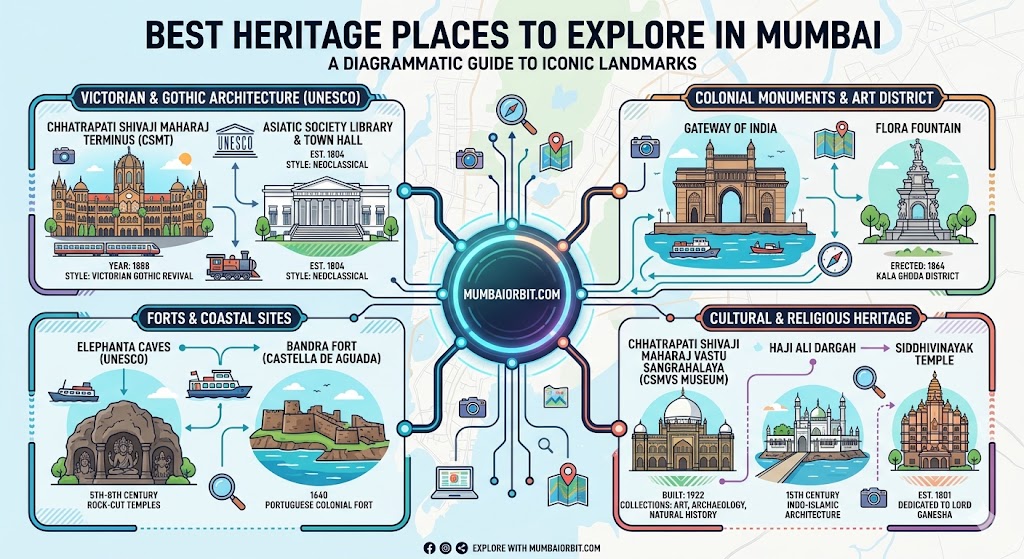
Gateway of India
The Gateway of India is one of Mumbai’s most iconic landmarks and a symbol of the city. Located on the waterfront overlooking the Arabian Sea, it attracts visitors from around the world.
Highlights
- Mumbai’s most recognizable monument
- Impressive Indo-Saracenic architecture
- Historic waterfront location
- Popular tourist attraction
Historical Significance
Built during the British colonial era, the Gateway of India commemorates a royal visit and remains one of Mumbai’s most important historical landmarks.
Visitor Experience
Visitors can enjoy beautiful sea views, heritage photography, and boat rides departing from the nearby harbor.
Chhatrapati Shivaji Maharaj Terminus
Formerly known as Victoria Terminus, this magnificent railway station is a UNESCO World Heritage Site and one of the finest examples of Victorian Gothic architecture in India.
Highlights
- UNESCO World Heritage status
- Spectacular architectural details
- Historic railway significance
- Active transportation hub
Historical Significance
The station symbolizes Mumbai’s role as a major commercial and transportation center during the colonial period.
Visitor Experience
Visitors admire the building’s elaborate carvings, stained glass, and grand facade.
Elephanta Caves
Located on Elephanta Island, these ancient rock-cut caves are among India’s most significant archaeological treasures.
Highlights
- UNESCO World Heritage Site
- Ancient rock-cut architecture
- Magnificent Shiva sculptures
- Island excursion experience
Historical Significance
The caves date back centuries and represent remarkable achievements in Indian religious art and sculpture.
Visitor Experience
A ferry ride across Mumbai Harbor adds to the adventure of exploring these historic caves.
Rajabai Clock Tower
Rajabai Clock Tower stands proudly within the University of Mumbai campus and is one of the city’s most recognizable heritage structures.
Highlights
- Gothic Revival architecture
- Historic university landmark
- Architectural elegance
- Cultural significance
Historical Significance
The tower reflects the influence of Victorian architecture on Mumbai’s urban landscape.
Visitor Experience
Visitors often photograph its impressive design and admire its historical charm.
Bombay High Court
The Bombay High Court is one of India’s oldest and most important judicial institutions. Its historic building is a masterpiece of colonial architecture.
Highlights
- Historic legal institution
- Gothic architectural style
- Heritage significance
- Landmark status
Historical Significance
The building has played a crucial role in India’s legal and administrative history.
Visitor Experience
Architecture enthusiasts appreciate its impressive facade and historical importance.
David Sassoon Library
This historic library is one of Mumbai’s most beautiful heritage buildings and remains a valuable cultural institution.
Highlights
- Victorian architecture
- Literary heritage
- Historic reading halls
- Cultural significance
Historical Significance
The library reflects Mumbai’s intellectual and educational development during the colonial era.
Visitor Experience
Visitors can explore the building’s architecture and learn about its contribution to public education.
Chhatrapati Shivaji Maharaj Vastu Sangrahalaya
One of India’s finest museums, this institution houses extensive collections related to art, archaeology, and natural history.
Highlights
- Rich museum collections
- Indo-Saracenic architecture
- Cultural exhibits
- Educational experiences
Historical Significance
The museum preserves important artifacts that showcase India’s diverse heritage.
Visitor Experience
Visitors can spend hours exploring galleries covering centuries of history and culture.
Flora Fountain
Flora Fountain is a historic landmark located in the heart of South Mumbai. It remains one of the city’s most photographed heritage structures.
Highlights
- Beautiful stone sculpture
- Colonial-era landmark
- Heritage district location
- Architectural elegance
Historical Significance
The fountain represents Mumbai’s urban development during the nineteenth century.
Visitor Experience
Its central location makes it a popular stop during heritage walks.
Mani Bhavan
Mani Bhavan served as Mahatma Gandhi’s residence during his visits to Mumbai and played an important role in India’s freedom movement.
Highlights
- Gandhi museum
- Freedom struggle exhibits
- Historical artifacts
- Educational value
Historical Significance
Many important discussions and events related to India’s independence movement took place here.
Visitor Experience
Visitors gain insights into Gandhi’s life and India’s journey toward independence.
Art Deco Buildings of Marine Drive
Marine Drive is famous not only for its scenic beauty but also for its remarkable collection of Art Deco buildings.
Highlights
- UNESCO-recognized heritage district
- Art Deco architecture
- Coastal setting
- Unique urban character
Historical Significance
These buildings represent one of the world’s largest collections of Art Deco architecture.
Visitor Experience
Walking along Marine Drive offers a unique opportunity to appreciate architecture and ocean views simultaneously.
Architectural Styles Found in Mumbai
Mumbai’s heritage landscape showcases a remarkable blend of architectural influences.
Victorian Gothic
Seen in Chhatrapati Shivaji Maharaj Terminus and several institutional buildings.
Indo-Saracenic
A fusion of Indian and European architectural traditions visible in many public buildings.
Art Deco
Prominently displayed along Marine Drive and surrounding areas.
Colonial Architecture
Found throughout South Mumbai in administrative, educational, and commercial structures.
Neo-Classical Influences
Visible in several historic civic and cultural buildings.
Heritage Walks in Mumbai
Heritage walks are among the best ways to experience Mumbai’s historical landmarks.
Popular Heritage Walks
- Fort district heritage walk
- Kala Ghoda cultural walk
- South Mumbai architecture tour
- Marine Drive Art Deco walk
- Colonial Mumbai exploration
These guided experiences provide deeper insights into the city’s history and architecture.
Best Time to Explore Heritage Places
Certain times of the year offer more comfortable sightseeing conditions.
Recommended Seasons
- October to March for pleasant weather
- Early mornings for fewer crowds
- Late afternoons for photography
- Winter months for walking tours
Photography Tips for Heritage Travelers
Mumbai’s heritage sites provide excellent opportunities for photography.
Helpful Suggestions
- Visit during golden hour
- Capture architectural details
- Focus on symmetry and patterns
- Respect site regulations
- Carry a wide-angle lens
- Explore different perspectives
Suggested One-Day Mumbai Heritage Itinerary
Morning
- Gateway of India
- Ferry ride to Elephanta Caves
Afternoon
- Chhatrapati Shivaji Maharaj Terminus
- Flora Fountain
- Rajabai Clock Tower
Evening
- Marine Drive Art Deco district
- Sunset photography session
- Heritage walk through Kala Ghoda
Nearby Cultural Attractions
Visitors can combine heritage exploration with other cultural experiences.
Popular Attractions
- Marine Drive
- Kala Ghoda
- Jehangir Art Gallery
- National Gallery of Modern Art
- Colaba Causeway
- Historic markets and cultural districts
Travel Tips for Heritage Lovers
Planning ahead can make your heritage journey more rewarding.
Useful Tips
- Wear comfortable walking shoes
- Carry water during walking tours
- Use local guides for historical insights
- Check attraction timings in advance
- Keep a camera ready for architectural photography
- Explore heritage districts on foot whenever possible
Frequently Asked Questions
1. What is the most famous heritage place in Mumbai?
The Gateway of India is widely considered Mumbai’s most iconic heritage landmark.
2. Which heritage sites in Mumbai are UNESCO-listed?
Chhatrapati Shivaji Maharaj Terminus and Elephanta Caves are UNESCO World Heritage Sites.
3. Are heritage walks available in Mumbai?
Yes, several organizations and local guides offer heritage walks across South Mumbai and other historic districts.
4. What is the best time for heritage tourism in Mumbai?
The cooler months from October to March provide the most comfortable conditions for exploration.
5. Can visitors photograph heritage buildings?
Photography is generally allowed at most locations, though certain sites may have specific restrictions.
6. Which place is best for history lovers?
Mani Bhavan and Chhatrapati Shivaji Maharaj Terminus are particularly appealing for those interested in history.
7. How many days are needed to explore Mumbai’s heritage?
A well-planned heritage tour can be completed in two to three days, though additional time allows deeper exploration.
8. Are guided tours recommended?
Yes, guided tours provide valuable historical context and insights into architectural details.
9. Which area has the highest concentration of heritage buildings?
South Mumbai, particularly the Fort and Kala Ghoda districts, contains many of the city’s most important heritage landmarks.
10. Is Mumbai suitable for heritage photography?
Absolutely. The city’s diverse architectural styles and historic landmarks make it an excellent destination for photographers.
Conclusion
Mumbai’s heritage places offer a fascinating window into the city’s remarkable journey from a group of islands to one of the world’s most dynamic urban centers. From the grandeur of the Gateway of India and the architectural brilliance of Chhatrapati Shivaji Maharaj Terminus to the ancient artistry of the Elephanta Caves and the elegance of Marine Drive’s Art Deco buildings, every landmark tells a unique story. For heritage lovers, these sites provide an unforgettable opportunity to explore the history, culture, architecture, and traditions that continue to shape Mumbai’s identity. A heritage tour of Mumbai is not just a sightseeing experience but a journey through centuries of transformation, innovation, and cultural richness.
