Introduction
Mumbai offers sea views, old streets, island caves, local food, and film stories. You can enjoy a quiet waterfront walk, then explore a busy market nearby.
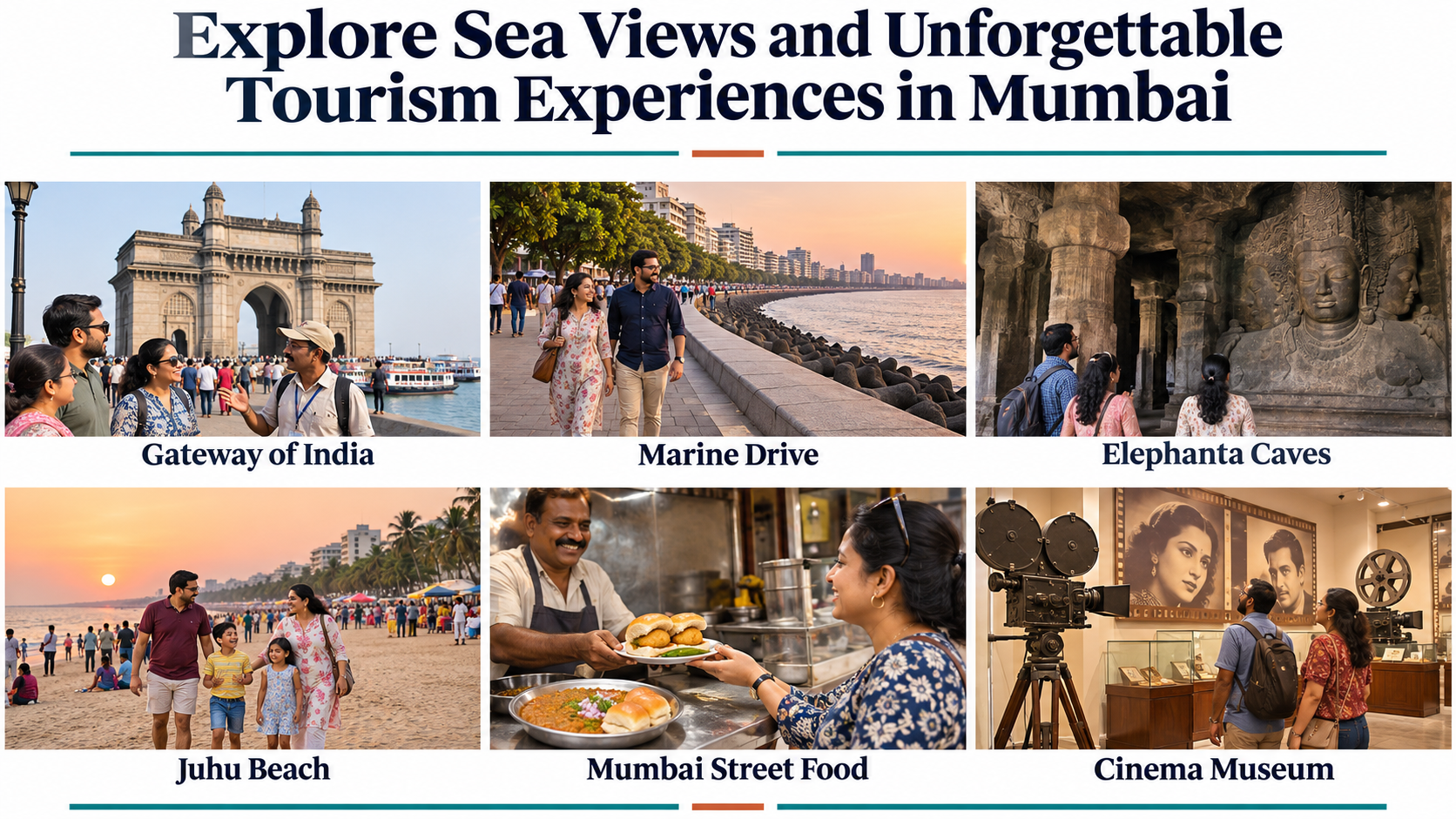
Popular tourism experiences in Mumbai include the Gateway of India, Marine Drive, Elephanta Caves, heritage walks, and food outings. Cinema visits and live events add more choices.
However, a good trip needs more than a long list. Mumbai covers a large area, and travel can take time.
First, choose the experiences that interest you most. Then, group nearby stops into a simple route.
Mumbai Orbit can help you explore local events. Check each listing’s venue and details before adding it to your day.
1. Visit the Gateway of India and Explore Heritage Streets
The Gateway of India offers a memorable first view of Mumbai’s waterfront. Start here to enjoy the harbour setting and study the landmark closely.
Next, explore nearby Colaba or choose a guided heritage walk. Ask the guide to explain the people and trade behind the buildings.
For more building history, consider the Oval Maidan area. Look for pointed arches, carved stone, curved balconies, and other design details.
Chhatrapati Shivaji Maharaj Terminus also offers a striking view. However, it remains a working railway station, so keep passenger routes clear.
Choose a manageable route rather than joining every stop. Also, confirm whether a walk includes interiors or only outside views.
2. Enjoy Marine Drive and Mumbai’s Beach Life
Marine Drive suits visitors who want sea views without a packed schedule. Walk a comfortable stretch and pause to watch the changing light.
First, check the weather and choose a suitable time. Carry water because shade may feel limited along parts of the route.
Next, leave room to sit and enjoy the setting. A waterfront visit does not need a long list of tasks.
Juhu Beach offers another popular coastal experience. However, it lies away from South Mumbai’s main heritage stops.
Plan it around your hotel or a separate outing. Follow local warnings and stay clear of rough waves.
Also, keep public spaces clean and respect other visitors.
3. Take a Ferry Trip to Elephanta Caves
Elephanta Caves combine a harbour journey with remarkable rock-cut art. Boats usually leave from the Gateway of India area when services operate.
First, confirm ferry service, cave access, and the last return boat. Weather and sea conditions can affect the journey.
Next, allow time for queues, the crossing, and the climb towards the caves. Ask about the walking effort before booking.
Inside, focus on a few sculptures rather than rushing through. The main cave’s three-faced Shiva is a key feature to study.
Follow barriers and avoid touching carved surfaces. Also, keep food secure around monkeys.
Give this outing enough space in your day. Do not plan a tight connection immediately after returning.
4. Taste Local Food and Explore Market Streets
A food outing helps you experience Mumbai through daily life. Popular choices include vada pav, pav bhaji, bhel puri, and sev puri.
Vada pav pairs a spiced potato fritter with bread. Pav bhaji combines soft bread with a rich vegetable mash.
First, choose a small area and a few dishes. You do not need to cross the city for every snack.
Next, look for clean handling and food that sellers prepare freshly. Tell your guide or host about allergies before the outing.
Also, ask about spice levels and ingredients. Use trusted drinking water.
If you add shopping, set a budget first. Browse without blocking shop entrances or busy walking routes.
5. Explore Film Stories and Live Performances
Mumbai offers more than the chance to recognise film locations. You can also learn how people make and share cinema.
The National Museum of Indian Cinema displays film equipment, posters, costumes, and other material. Its exhibits cover Indian cinema beyond Hindi films alone.
First, check opening hours and available galleries. Then, choose a few themes, such as sound, cameras, or film design.
If you prefer a studio outing, confirm the exact tour and authorised booking route. Ask what visitors can actually see.
A studio visit does not promise a live shoot or celebrity meeting. Also, explore theatre, music, or other events through Mumbai Orbit.
Real Experience & Personal Stories
Small moments often shape the strongest travel memories. You might remember a harbour view, a carved figure, or the taste of a fresh snack.
During your trip, write down one moment that stood out. Then, explain what made it meaningful.
Also, speak politely with guides, sellers, and local people when they have time. Ask before recording their words or sharing close photos.
Keep facts separate from feelings when writing your story. Explain what you saw and what someone told you.
This article does not claim a personal visit. These steps help you build an honest account of your own Mumbai experience.
Case Studies & Success Stories
These sample plans show how different needs can shape a useful trip. They describe possible visits, rather than real customer results.
A family with one city day chooses the Gateway, a meal, and Marine Drive. They leave time for rest and travel.
A history lover gives Elephanta its own main outing. They confirm return boats before adding an evening plan.
A film fan staying near Goregaon checks a suitable studio tour. They avoid adding several distant South Mumbai stops.
Each plan has a clear goal. Success means enjoying that goal comfortably.
A longer route would not always improve the experience. Good planning protects both learning time and energy.
Original Insights & Opinions
Mumbai feels more rewarding when you balance activity with breathing room. A busy food walk and a calm sea view offer different kinds of enjoyment.
My recommendation is to choose one main experience for each half-day. Add nearby stops only when time allows.
Also, plan around where you stay. A famous place across the city may need more travel than you expect.
Do not use popularity as your only guide. An art lover may prefer a museum over a studio outing.
Finally, leave room for ordinary city life. Watching boats, browsing shops, or enjoying a meal can matter as much as visiting a landmark.
Industry Statistics & Research Data
No single ranking proves which Mumbai experience everyone enjoys most. Different visitors value food, history, films, and sea views differently.
However, official heritage records help explain the value of certain places. UNESCO recognises Elephanta Caves, the historic railway terminus, and Mumbai’s Victorian Gothic and Art Deco ensemble.
An ensemble means a group of related buildings. Around Oval Maidan, these buildings show different stages of the city’s growth.
Use that research to look more closely at design and setting. Do not treat heritage status as a promise of open interiors.
Also, check current visitor details separately. Old travel figures cannot confirm today’s access, ferry service, or ticket price.
Step-by-Step Guides & Tutorials
Step 1: Choose your main interest.
Pick sea views, history, food, films, shopping, or live events.
Step 2: Group nearby experiences.
Keep South Mumbai stops together. Plan Juhu or Goregaon around a separate route when practical.
Step 3: Check current access.
Confirm hours, closures, ferry services, and tour availability.
Step 4: Plan the full journey.
Include travel, walking, queues, meals, and the return trip.
Step 5: Read the booking details.
Check the host, meeting point, included services, and refund terms.
Step 6: Set your full budget.
Count transport, tickets, guides, food, and extra charges.
Step 7: Prepare for the day.
Carry water, suitable shoes, weather cover, and saved booking details.
Expert Interviews & Quotes
A useful local guide should explain both the sights and the practical limits. Ask what the route covers before paying.
For a heritage walk, ask how Indian craftspeople shaped the buildings. For a food outing, ask about ingredients and serving sizes.
For a film tour, request a clear list of visitor areas. Avoid relying on promises of celebrity access.
No private expert interview forms part of this article. Invented quotes would not help you choose wisely.
Instead, look for hosts who answer direct questions clearly. Also, notice whether they explain changes, access limits, and cancellation terms before the trip.
That clarity helps you compare offers fairly.
Detailed Comparisons: City Walks vs Island Trips
A city walk gives you more room to pause or change direction. An island visit depends more on transport and return arrangements.
| Experience | Main appeal | Main planning need |
|---|---|---|
| Gateway and heritage walk | Landmark views and city stories | Walking route and building access |
| Marine Drive | Sea views and a relaxed pace | Weather and comfortable timing |
| Elephanta Caves | Ferry journey and carved art | Boat service, steps, and return time |
| Food outing | Local dishes and street life | Ingredients, hygiene, and portions |
| Cinema visit | Film history or studio settings | Exact access and booking details |
Choose according to your interests and comfort. Also, avoid combining too many experiences with fixed start times.
Unique Frameworks & Methodologies
Use a simple Choose, Group, Check, Enjoy method. It helps you turn a long wish list into a useful day.
Choose: Pick two experiences you care about most. Keep other ideas as optional extras.
Group: Put nearby stops together. This reduces unnecessary travel across the city.
Check: Confirm access, weather, transport, and the total cost. Read what each booking includes.
Enjoy: Leave enough time to pause, eat, and look around. Adjust the plan if someone feels tired.
Finally, review the day with your group. A good plan should fit the people travelling.
It should not require everyone to keep rushing to the next stop.
Real Examples & Use Cases
Use these sample outlines as starting points. Adjust them to your hotel, current access, and travel pace.
| Time available | Suggested focus | Main check |
|---|---|---|
| One morning | Gateway and a short Colaba walk | Weather and walking comfort |
| A relaxed evening | Marine Drive and a nearby meal | Travel and return arrangements |
| A larger daytime block | Elephanta Caves | Ferry service and last return |
| A film-focused outing | Cinema museum or confirmed studio tour | Hours and exact visitor access |
Mumbai Orbit can help you explore events around these plans. However, check the actual venue carefully.
Confirm whether the price includes transport, entry, food, or a guide. Do not assume one ticket covers the whole outing.
Frequently Asked Questions About Mumbai Orbit
1. What is Mumbai Orbit?
Mumbai Orbit helps people discover listed events and book tickets for activities.
2. Can it help with sightseeing plans?
Use it to explore suitable events. Confirm attraction access and transport separately.
3. Does Mumbai Orbit offer every Mumbai tour?
Do not assume that it does. Check current listings for a suitable experience.
4. Does an event ticket include attraction entry?
Read the offer carefully. Entry, transport, food, and guide services may cost extra.
5. Which experiences suit a first visit?
The Gateway, a heritage walk, Marine Drive, and local food offer a varied starting point.
6. Can I visit Elephanta during rough weather?
Check operating advice before leaving. Weather can affect ferry services and travel plans.
7. Can children enjoy these experiences?
Yes. Choose manageable walks, regular breaks, and activities that match their interests.
8. Do film tours include celebrity meetings?
Do not expect one. Confirm the actual visitor experience before booking.
9. Can I cover all of Mumbai in one day?
Choose a smaller route. Long travel and queues can leave little time to enjoy places.
10. What should I check before paying?
Confirm the host, venue, meeting time, included services, total price, and refund terms.
Final Thought
Choose the Mumbai experiences that match your interests and travel pace. A thoughtful day can include discovery, good food, and time to relax.
Start with a small route. Then, confirm the details and leave room for changes.
Use Mumbai Orbit to explore events that may complement your visit. Check the venue and booking terms before paying.
Most of all, give each experience your attention. Mumbai becomes easier to enjoy when you stop rushing through it.
