Mumbai is one of India’s most famous cities.
It is known for its busy streets and sea views.
The city also has a rich history.
You can find old buildings, temples, museums, beaches, and markets.
Mumbai also has famous places linked with art and culture.
This gives visitors many ways to explore the city.
Some attractions show Mumbai’s history.
Others show its modern and lively side.
If you are visiting Mumbai for the first time, start with its well-known landmarks.
Then add places that match your interests.
Here are some of the key tourist attractions to consider.
Gateway of India
The Gateway of India is one of Mumbai’s best-known landmarks.
It stands beside the Arabian Sea in South Mumbai.
The monument was completed in 1924.
Its design follows the Indo-Saracenic style.
The Gateway was built to mark the visit of King George V and Queen Mary in 1911.
Today, the area is a popular meeting point for visitors.
You can enjoy views of the sea from the waterfront.
You can also explore nearby Colaba.
The Gateway also provides access to ferry trips toward Elephanta Island.
Try visiting early if you want a quieter experience.
The area can become busy later in the day.
Marine Drive
Marine Drive is another famous Mumbai landmark.
It runs along the Arabian Sea.
The long road and curved coastline create a memorable city view.
People often visit for walks and sea views.
The area looks especially different after sunset.
Streetlights along the curve create the famous “Queen’s Necklace” effect.
The official Maharashtra Tourism website lists Marine Drive among Mumbai’s major attractions.
You do not need a full day here.
A walk can easily fit into a busy sightseeing plan.
The area also works well for a relaxed evening.
Keep in mind that Mumbai weather can change quickly.
Check the weather before planning a long outdoor visit.
Chhatrapati Shivaji Maharaj Terminus
Chhatrapati Shivaji Maharaj Terminus is more than a railway station.
It is also an important heritage landmark.
The building was completed in 1887.
It combines Victorian Gothic design with Indian architectural elements.
The site has UNESCO World Heritage status.
The building has detailed stone work and impressive domes.
Its design makes it interesting for people who enjoy architecture.
The station also remains an active transport hub.
So, visitors can see history and modern city life in one place.
If you take photographs, avoid blocking passengers.
Remember that this is still a working railway station.
Elephanta Caves
The Elephanta Caves offer a different kind of Mumbai experience.
They are located on Elephanta Island in Mumbai Harbour.
Visitors usually travel there by ferry from the Gateway of India.
The journey takes about an hour.
The caves contain rock-cut temples and large sculptures.
The main cave is known for its important Shiva sculptures.
The famous Trimurti is one of the site’s best-known works.
The Elephanta Caves became a UNESCO World Heritage Site in 1987.
The visit involves walking and climbing steps.
Wear comfortable shoes.
Carry water, especially on warm days.
The caves are closed to visitors on Mondays, according to Maharashtra Tourism.
Chhatrapati Shivaji Maharaj Vastu Sangrahalaya
This museum is useful for visitors interested in Indian history and art.
It was formerly known as the Prince of Wales Museum.
The museum stands near the Gateway of India.
Its building itself is an important architectural landmark.
The collection covers areas such as archaeology, art, and natural history.
The museum can add depth to a Mumbai trip.
It helps visitors understand India’s past through objects and artworks.
It is also a useful indoor option on a hot or rainy day.
Allow enough time if you want to explore the collections slowly.
Check the current opening hours before visiting.
Haji Ali Dargah
Haji Ali Dargah is a well-known religious landmark.
It stands on an islet off the coast of Worli.
A narrow causeway connects it with the mainland.
The site is known for its Indo-Islamic architecture.
It also attracts visitors from different backgrounds.
The experience can depend on the tide and weather.
Visitors should follow the site’s rules.
Dress respectfully when visiting a religious place.
Keep the surroundings clean.
Also check current access information before travelling there.
Siddhivinayak Temple
Siddhivinayak Temple is located in Prabhadevi.
It is dedicated to Lord Ganesha.
The temple was built in 1801 and later expanded.
It remains an important place of worship in Mumbai.
Many visitors come for religious reasons.
Others visit to understand Mumbai’s spiritual side.
Temple visits may involve queues.
So, allow extra time in your plan.
Follow the temple’s entry and photography rules.
These can differ from rules at other attractions.
Sanjay Gandhi National Park
Mumbai is not only about buildings and busy roads.
Sanjay Gandhi National Park gives visitors a large green space within the city.
The park is known for its natural setting and wildlife.
It also contains the ancient Kanheri Caves.
These caves add a historical side to the nature visit.
The combination makes the park different from a normal city attraction.
Nature lovers can spend time exploring the park.
History lovers can also visit the cave complex.
Wear comfortable shoes if you plan to walk.
Carry water and follow park rules.
Do not feed or disturb animals.
Juhu Beach
Juhu Beach is one of Mumbai’s popular coastal spots.
It is known for its open beach area and lively atmosphere.
The beach also has many local food stalls.
Visitors can try popular Mumbai snacks during an evening visit.
Vada pav, bhel puri, and other street foods are closely linked with Mumbai’s food culture.
Juhu can be a good place for a relaxed evening.
However, beaches can become crowded.
Keep personal belongings secure.
Also follow local safety advice near the water.
Avoid entering the sea when conditions are unsafe.
Colaba Causeway
Colaba Causeway gives visitors a taste of Mumbai’s street shopping.
The area has shops, stalls, cafes, and busy streets.
You can find clothing, accessories, souvenirs, and other items.
The market is also close to the Gateway of India.
Mumbai City tourism information recommends combining a Gateway visit with a walk through Colaba Causeway.
Shopping here can be fun.
But take your time before buying something.
Compare prices when needed.
Keep your belongings close in crowded areas.
The area works well for visitors who enjoy shopping and city walks.
Flora Fountain and Fort Area
The Fort area shows another side of Mumbai.
It has historic buildings, offices, libraries, and public spaces.
Flora Fountain is one of its well-known landmarks.
The area is useful for people who enjoy architecture and city history.
You can also explore nearby heritage buildings on foot.
The Mumbai City tourism site lists Flora Fountain among its tourist places.
A walking route can work well here.
However, weekdays can feel busy because of office traffic.
Plan your walk with enough time.
Wear comfortable shoes.
What Makes Mumbai’s Attractions Different?
Mumbai’s tourist places do not all offer the same experience.
The Gateway of India shows colonial-era history.
Marine Drive offers sea views.
CSMT shows historic architecture.
Elephanta Caves connect visitors with ancient art.
Museums explain India’s past.
Temples and Haji Ali show the city’s religious life.
Juhu Beach shows Mumbai’s coastal side.
Sanjay Gandhi National Park gives visitors a break from the busy city.
Together, these places show many sides of Mumbai.
How Should First-Time Visitors Plan?
Do not try to visit every attraction in one day.
Mumbai is a large city.
Traffic can also affect travel time.
A better approach is to group nearby places.
For example, you can explore:
Gateway of India → CSMVS → Colaba Causeway
on one sightseeing route.
You can also combine:
Marine Drive → nearby South Mumbai landmarks
on another route.
For Elephanta Caves, plan a separate part of the day.
The ferry journey takes time.
This simple approach can make the trip less tiring.
A Simple Three-Day Plan
Day 1: South Mumbai
Start with the Gateway of India.
Then visit CSMVS.
Walk around Colaba Causeway.
Later, explore CSMT.
Finish with an evening walk near Marine Drive.
Day 2: Culture and Nature
Visit Siddhivinayak Temple.
Then explore another cultural attraction.
Later, visit Sanjay Gandhi National Park if time allows.
Check the current timings before you leave.
Day 3: Island or Beach Experience
Take the ferry to Elephanta Caves.
Return to Mumbai later in the day.
Alternatively, spend the day around Juhu Beach and nearby areas.
Choose based on your interests and energy.
Best Time to Visit Mumbai Attractions
The best time depends on the type of activity.
October to February usually offers more comfortable sightseeing weather.
Maharashtra Tourism lists October to February as a preferred period for sightseeing in Mumbai.
The monsoon can bring heavy rain.
Rain can affect outdoor plans and travel time.
March to May can feel hot and humid.
If you travel during warmer months, plan outdoor visits carefully.
Morning and evening can be easier for outdoor sightseeing.
Always check the weather before leaving.
What Should Visitors Carry?
Keep your day bag simple.
Carry drinking water.
Bring a phone charger or power bank.
Use comfortable walking shoes.
Carry an umbrella during the rainy season.
Keep some cash for small purchases.
Also carry identification when required.
For religious places, dress in a respectful way.
For outdoor places, use sun protection.
A light and practical bag makes city travel easier.
Common Mistakes to Avoid
One common mistake is planning too many attractions.
Mumbai travel can take longer than expected.
Another mistake is ignoring travel time.
A place may look close on a map.
Traffic can still make the journey slow.
Visitors should also avoid booking every activity too tightly.
Leave some extra time.
Check attraction timings before leaving your hotel.
For places such as Elephanta Caves, check the weekly closure day too.
Final Thoughts
Mumbai has many attractions for different kinds of travellers.
You can explore history at the Gateway of India.
You can admire architecture at CSMT.
You can enjoy sea views at Marine Drive.
You can explore ancient art at Elephanta Caves.
You can learn about Indian history at CSMVS.
You can experience local faith at Siddhivinayak Temple and Haji Ali.
You can enjoy nature at Sanjay Gandhi National Park.
You can also explore beaches and busy markets.
The best way to experience Mumbai is to avoid rushing.
Choose places that match your interests.
Group nearby attractions together.
Leave enough time for travel.
That way, you can see more of Mumbai while still enjoying the city.
Quick Takeaway
Mumbai offers a mix of heritage, history, religion, nature, beaches, museums, food, and city life.
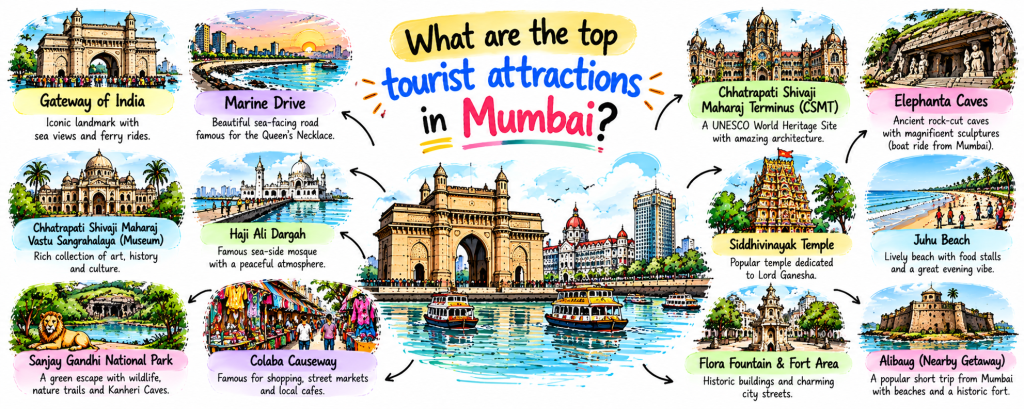
For a first visit, consider the Gateway of India, Marine Drive, CSMT, Elephanta Caves, CSMVS, Haji Ali, Siddhivinayak Temple, Sanjay Gandhi National Park, Juhu Beach, and Colaba Causeway.
These places cover many different sides of Mumbai.
Hashtags
#MumbaiTourism · #MumbaiTravel · #VisitMumbai · #MumbaiTouristPlaces · #MaharashtraTourism · #MumbaiHeritage · #MumbaiTravelGuide
